That '60% Off' Tag Is Lying to You — Here's How to Prove It
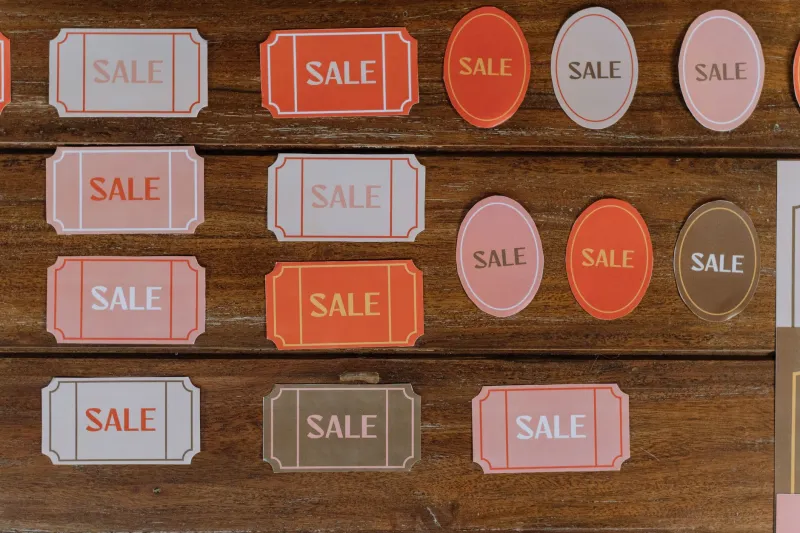
There's a particular kind of excitement that hits when you see a price tag screaming "Was $199.99 — NOW $79.99!" Your brain does the math instantly, declares victory, and suddenly you're carrying something to the register you didn't even walk in planning to buy. That feeling? Retailers have spent decades engineering it.
The uncomfortable truth is that a significant chunk of "comparison pricing" in American retail is built on a foundation that ranges from misleading to outright fictional. And it's not just shady fly-by-night websites doing it — major department stores, big-box chains, and well-known e-commerce platforms have all been caught playing the same game.
At RateToBuy, our whole thing is helping you figure out what something is actually worth before you hand over your money. So let's pull back the curtain on how the markup game really works.
What Even Is a "Comparison Price"?
When a retailer shows you a strikethrough price — sometimes labeled "original price," "list price," "was," or "MSRP" — they're implying that the item used to cost that much and you're now getting a deal. Legally, the FTC has guidelines suggesting that a comparison price should reflect a price at which the item was genuinely offered for a reasonable period of time. The problem is that "reasonable" is loosely defined, enforcement is inconsistent, and retailers have found countless creative ways to work around the spirit of the rule while technically skirting the letter of it.
Some common setups you'll encounter:
- The Phantom Original Price: The item was briefly listed at the inflated price — sometimes for as little as a day or two — before being "marked down" permanently. The high price was never meant to be a real selling price; it existed solely to manufacture a discount.
- The MSRP Fiction: Manufacturer's Suggested Retail Price sounds official, but many products never sell at MSRP anywhere. It's a ceiling number that exists mostly on paper. Comparing against MSRP to imply savings is a common move in electronics, bedding, and furniture.
- The Outlet Illusion: Outlet stores — both physical and online — frequently sell items made specifically for the outlet channel. They're not overstocked premium goods; they're lower-quality versions built to be "marked down" from day one. The comparison price refers to a product that doesn't really exist in the same form.
- The Anchor-and-Rotate Strategy: Some retailers cycle products through artificial high prices at the beginning of a season, then "discount" them for the rest of the year. The sale price is actually the normal price. The "original" price is the anomaly.
Why Smart Home Gear Is Especially Vulnerable to This
If you've shopped for smart home devices — security cameras, smart displays, robot vacuums, smart bulbs, mesh routers — you've almost certainly seen this tactic in overdrive. The category is perfect for it: products have a lot of technical specs that are hard to compare apples-to-apples, brand names carry heavy weight, and buyers often don't have a strong intuitive sense of what something "should" cost.
A smart security camera system might carry a comparison price of $349 while selling for $189. But if you dig into third-party price tracking tools, you'll often find it has never sold for $349 — not on the retailer's own site, not on Amazon, not anywhere. The $349 number is aspirational fiction.
This matters because smart home purchases are often long-term investments. You're buying into an ecosystem, committing to a hub, or choosing a platform you'll expand over time. Making that decision based on a fake discount can lock you into something that wasn't actually the best value to begin with.
How to Actually Verify Whether a Deal Is Real
The good news: the tools to fact-check these prices are free and take about two minutes to use.
1. Use a price history tracker. Browser extensions like CamelCamelCamel (for Amazon) or Honey track historical pricing and show you a product's actual price over time. If that "was $199" item has been $79 for the past eight months, the comparison price is smoke.
2. Search the exact model number across multiple retailers. Don't just search the product name — grab the model number and search it directly. You'll quickly see whether other stores are pricing it similarly or whether one retailer is inflating their "original" number.
3. Check the manufacturer's site. Sometimes the brand's own website lists a genuine MSRP and shows authorized retailers. If the "original price" on the tag is 40% higher than what the manufacturer shows as MSRP, something's off.
4. Watch for seasonal timing. Certain markdowns are timed strategically around major shopping events — Black Friday, Prime Day, back-to-school season. Prices often get quietly raised a few weeks before these events so the eventual "deal" looks more dramatic. If you've been watching a product for a while, you may notice the "original price" on the tag changes over time.
5. Read the fine print on the tag. Some retailers are legally required to specify what the comparison price refers to — whether it's their own former price, a competitor's price, or MSRP. "Compare at" vs. "Was" vs. "MSRP" can mean very different things, and knowing which one you're looking at changes how seriously you should take it.
The Psychological Hook and How to Unhook It
The reason comparison pricing works so well isn't just that people are naive — it's that human brains are genuinely wired to respond to anchoring. The first number we see becomes a reference point, and everything after it gets evaluated relative to that anchor. Retailers know this cold.
The fix isn't to become a cynic who trusts nothing. It's to consciously reset your anchor. Before you look at the sale price or the comparison price, ask yourself: What would I be willing to pay for this item if I walked in with no price information at all? Then do a quick market check. If the sale price is at or below what the open market says it's worth, great — you've got a real deal. If the sale price is still higher than what you can find elsewhere with five minutes of searching, the markdown is theater.
The Bottom Line
Retailers aren't going to stop using comparison pricing — it works too well and the legal guardrails are too loose. But informed shoppers can opt out of the game. The next time a giant "SAVE $120" badge catches your eye, treat it as a starting point for research, not a finish line. A real deal holds up to scrutiny. A manufactured one falls apart the moment you start asking questions.
At RateToBuy, that's exactly what we're here to help you do — ask the right questions before the money leaves your wallet.