Free Today, Charged Forever: How Smart Device Trials Are Quietly Draining Your Bank Account

Let's be honest — "free trial" are two of the most dangerous words in consumer tech. You grab a shiny new gadget, activate it with your email and a credit card "just for verification," and enjoy 30 days of full features. Then life gets busy. The reminder email lands in your promotions folder. And somewhere around month three, you notice a $9.99 charge — then another, and another — from a company you barely remember signing up with.
This isn't an accident. It's a business model. And it's costing American households hundreds of dollars a year in charges they never consciously agreed to keep paying.
At RateToBuy, our whole thing is helping you figure out what something actually costs before you hand over your money. So let's pull back the curtain on the subscription trap and show you where it hides — and how to avoid it.
The Gadget Is Just the Beginning
Here's the thing manufacturers don't lead with in their marketing: the hardware is often just a key. What it unlocks — the cloud storage, the advanced features, the AI-powered insights — that's where the real revenue lives.
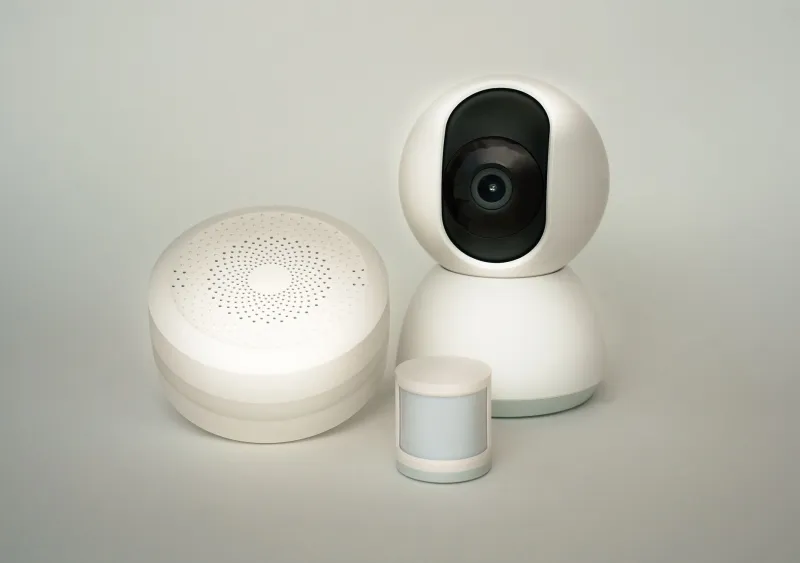
A home security camera might run you $49.99 upfront. Totally reasonable. But without a cloud subscription (often $3–$10/month per camera), your footage disappears the moment it's recorded. Want to review what happened last Tuesday? That'll cost you. Some brands, like Ring and Nest, offer limited free tiers, but the features you actually want — extended video history, smart alerts, person detection — sit behind a paywall.
Multiply that across a few cameras and you're looking at $100–$200 a year just to use a product you already bought.
Smart TVs: The Subscription Machine in Your Living Room
Your smart TV is essentially a storefront that displays content between attempts to sell you more content. Most major TV brands — Samsung, LG, Vizio — make significant money from advertising and data partnerships, but the real consumer cost comes from the streaming subscriptions the interface is designed to encourage.
Beyond the obvious (Netflix, Hulu, Disney+), there's a second layer of lesser-known add-ons: Paramount+, Peacock, AMC+, Apple TV+ — each hovering in the $5–$16/month range. Many are offered as free trials bundled with the TV purchase. A 2023 survey by C+R Research found that the average American underestimates their monthly subscription spending by more than $130. Smart TVs are a big reason why.
The interface on most smart TVs is specifically designed to make subscribing feel effortless and canceling feel like a hassle. That asymmetry is intentional.
Fitness Trackers: Paying to See Your Own Data
This one genuinely surprises people. You spend $200–$350 on a Fitbit, Garmin, or Whoop band, strap it to your wrist, and start tracking your heart rate, sleep, and workouts. Great. But here's the catch — some of the most useful insights are locked behind a premium tier.
Fitbit Premium runs $9.99/month (or $79.99/year). Whoop takes a different approach entirely: there's no upfront hardware cost, but you're paying $30/month for the membership, which includes the device. Garmin Connect has a robust free tier, but Garmin Connect+ (launched in 2024) adds AI coaching features for an additional fee.
The question worth asking before you buy any wearable: what do I actually get for free, and what disappears if I don't subscribe? The answer should factor heavily into your purchase decision.
Kitchen Tech Is Getting in on It Too
Smart kitchen appliances are the newest frontier. Brands like Tovala (smart oven) operate on a meal-kit subscription model where the appliance is subsidized — cheap upfront, but tied to recurring food orders. Breville's Joule Turbo sous vide circulator works with an app that offers a free tier, but the guided cooking features that make it actually useful require a Joule+ subscription.
Even coffee is in on it. Some high-end smart coffee machines link to subscription services for bean delivery or descaling reminders tied to proprietary pods. It's the razor-and-blades model dressed up in stainless steel.
How the Math Gets Ugly Fast
Let's run a quick scenario. Say you've got a fairly typical smart home setup:
- Security cameras (2x): $6/month each = $144/year
- Smart TV streaming add-ons (3 services): ~$30/month = $360/year
- Fitness tracker premium: $9.99/month = ~$120/year
- Smart speaker music service: $10.99/month = ~$132/year
That's $756/year in recurring charges attached to devices you've already purchased. And that's a conservative estimate. Many households are well north of $1,000 annually without realizing it.
Your Pre-Purchase Checklist
Before you add anything to your cart, run through these questions. We call it the RateToBuy True Cost Check:
1. Is there a required subscription to use core features? Not the bonus stuff — the features you'd actually use daily. If the answer is yes, factor that cost in from day one.
2. What does the free tier actually include? Read the feature comparison chart, not the marketing copy. Look for what's missing from free, not what's included in premium.
3. What happens to your data if you cancel? Some services delete your history if you drop to a free plan. For health or security data, that's a real consideration.
4. Is the trial auto-converted? Almost always yes. Set a calendar reminder for two days before the trial ends — not the day of.
5. How easy is it to cancel? If cancellation requires a phone call (looking at you, some home security providers), that friction is a feature, not a bug — for them.
6. What's the total cost of ownership over 3 years? Add hardware cost + (monthly subscription × 36). That number is the real price of the product.
The Bottom Line
None of this means you should avoid smart devices. A lot of them genuinely improve daily life, and some subscription services offer real value. But informed is the operative word. The companies behind these products are very good at making the upfront cost feel like the whole cost. It isn't.
At RateToBuy, we think the smartest shopping decision is the one made with all the numbers on the table — not just the ones printed on the box. So before you activate that free trial, take five minutes to figure out what you're actually signing up for. Future-you, checking the bank statement three months from now, will be grateful you did.