Stop Buying the Fear: What Extended Warranties Actually Cost You

You're standing at the checkout counter — or hovering over the "complete purchase" button — and the prompt appears: Would you like to add a 3-year protection plan for just $89.99? The word "just" is doing a lot of heavy lifting there. That's not an accident.
Extended warranties are one of retail's most profitable products. Not for you — for them. And understanding why that is can save you serious cash across every category of purchase you make.
The Markup Nobody Talks About
Here's the number that should make you put down your wallet: retailers and manufacturers typically pocket 50 to 80 cents of every dollar you spend on an extended warranty as pure profit. Compare that to the actual product you're buying, where margins might hover between 5 and 30 percent depending on the category.
Consumer Reports has studied this for years, and the conclusion is consistent — extended warranties are among the highest-margin items sold in electronics, appliance, and home goods retail. A $200 protection plan on a $600 smart TV? The insurer might expect to pay out $30 to $40 in actual claims on average. The rest is overhead, profit, and the cost of the sales pitch you just sat through.
Best Buy's Geek Squad Protection, Amazon's Asurion plans, and manufacturer-sold extended coverage all operate on similar models. The business only works if most customers never file a claim — and statistically, most don't.
What the Claims Data Actually Shows
Several independent analyses of warranty claims data — including research from the Consumer Federation of America — suggest that fewer than 20% of extended warranty holders ever file a claim, and of those, many receive only partial reimbursement after deductibles, exclusions, and depreciation calculations.
Let's put that in plain terms. If you buy a $100 warranty and have a 1-in-5 shot at using it, and that usage might yield $60 back after all the fine print, your expected value is $12. You paid $100 for $12 in expected protection. That's not insurance — that's a donation.
Now, manufacturers' warranties already cover defects for one to two years on most major appliances and electronics. The extended plan typically kicks in after that window. But here's the thing: if a product has a manufacturing defect, it usually shows up early. The failure spike at year four or five? That's normal wear — and most plans explicitly exclude it.
A Quick Decision Framework
So when does an extended warranty actually make sense? There are a few legitimate scenarios:
High repair cost, low replacement cost ratio — If a product would cost nearly as much to repair as replace, a warranty adds little value. But if repair costs are genuinely high relative to the item's price (think: high-end OLED TVs or built-in appliances that require professional installation), coverage can shift the math.
Accident-prone categories — Laptops, tablets, and smartphones used by kids or in active environments have legitimately higher damage rates. Accidental damage protection (distinct from standard extended warranties) tends to pay out more often in these cases.
No-deductible, transferable plans — Some plans, particularly on major appliances, can transfer to a new owner if you sell the home. That adds real resale value.
Items without a strong manufacturer track record — If you're buying a lesser-known smart home device or a budget-tier appliance brand with spotty reliability ratings, a modest protection plan might close the gap. Check RateToBuy's reliability scores before you buy — and before you decide on coverage.
For everything else? Self-insure.
The Self-Insurance Strategy
Here's a smarter play: every time you decline an extended warranty, deposit that amount into a dedicated savings account. Call it your "stuff breaks" fund. After a year of routine purchases — a laptop, a smart thermostat, a new washer — you might have $300 to $500 sitting there.
Statistically, that money will outlast most of the products it was meant to cover. And when something does break, you're not waiting on hold with a third-party claims processor or arguing over whether your issue qualifies under clause 4(b) of the service agreement.
This isn't a radical idea — financial advisors have been recommending self-insurance for low-to-mid value items for decades. The math just works better than the warranty.
How Retailers Use Fear to Close the Sale
The sales pitch almost always follows the same script. The associate mentions a horror story — a friend's refrigerator compressor that cost $900 to fix, a TV that died three months after the manufacturer's warranty expired. These stories are real. They're also cherry-picked.
The psychological lever being pulled is called loss aversion — humans feel the pain of a potential loss more intensely than the satisfaction of an equivalent gain. Retailers know this. The pitch isn't really about the warranty. It's about making you feel the imagined pain of not having it.
Knowing that doesn't make you immune, but it helps. Next time you feel that checkout anxiety, ask yourself: am I being shown data, or am I being shown a fear?
Category-by-Category Breakdown
- Smartphones: Skip it unless you have a demonstrated habit of cracking screens. AppleCare+ and similar plans can make sense for heavy users, but standard extended warranties rarely do.
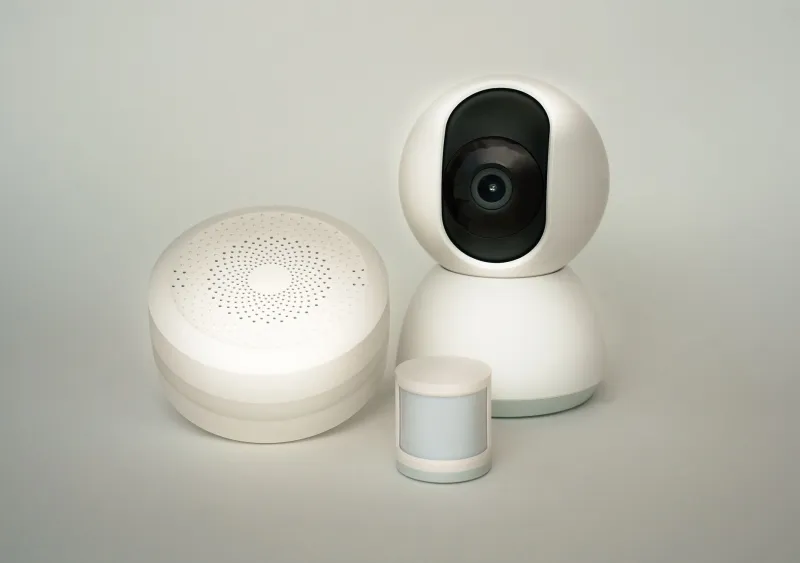
- Smart home devices (thermostats, security cameras, hubs): These items are relatively inexpensive to replace outright. Pass on the warranty.
- Major appliances (refrigerators, dishwashers, washing machines): The math gets closer here. Repair costs are high and installation adds to replacement cost. Still evaluate carefully — check if the plan covers labor, parts, and in-home service.
- Laptops and tablets: Accidental damage plans have more utility than standard extended coverage. Look at what's actually included.
- 4K and OLED TVs: Panel repairs are expensive but rare. The failure rate in years 2-5 is low on reputable brands. Decline unless you're buying a very large, very expensive display.
The Bottom Line
Extended warranties aren't a scam in the legal sense — but they're engineered to profit off your anxiety more than your risk. The actual claims data, the markup structure, and the exclusion-laden fine print all point in the same direction: for most buyers, most of the time, the plan isn't worth it.
Before you say yes at checkout, run the numbers. What's the realistic repair cost? What does the manufacturer already cover? What would self-insuring that amount actually look like?
At RateToBuy, we think smart shopping means knowing when you're paying for protection — and when you're just paying for peace of mind that you could manufacture yourself for a lot less.